Design System Favo
How it started
The Favo Design System started as my own proposal to establish a consistent visual and technical foundation for the company's products, making the development process more efficient, organized and scalable.
I kicked off the project and presented the idea to the front-end team, who quickly backed it and helped shape the first steps.
The process
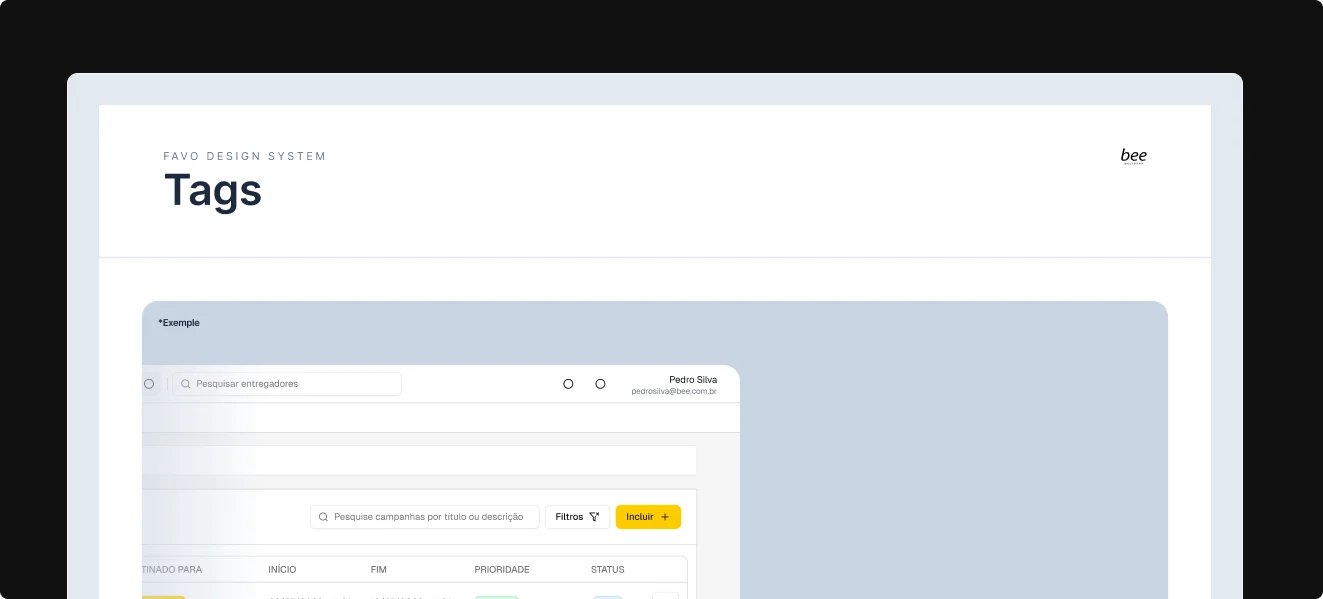
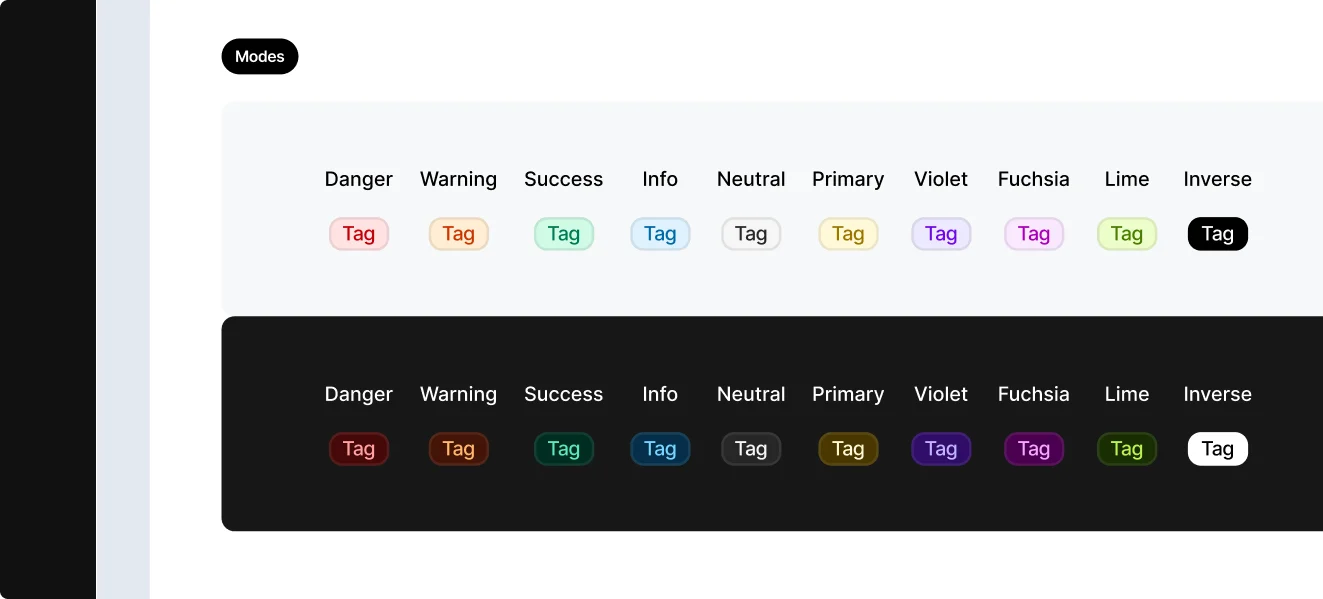
Using the ShadCN library as a starting point, I completely restructured its components, recreating them from scratch and adapting them to the specific needs of the Bee Delivery ecosystem.
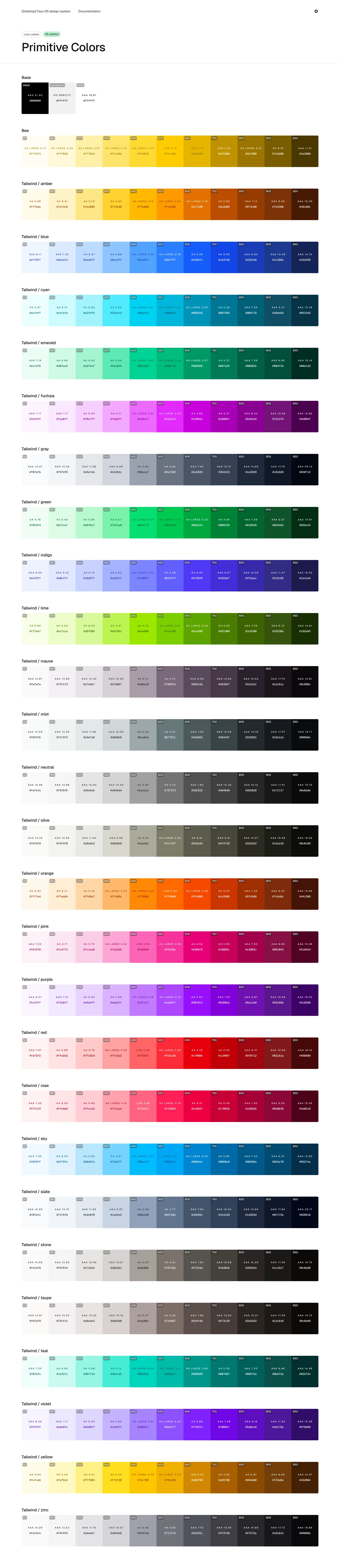
The work also involved cleaning up and standardizing the design tokens, including revising the spacing scale to follow multiples of 4, removing unnecessary colors and variables, and defining a leaner, more consistent structure aligned with the company's visual identity.
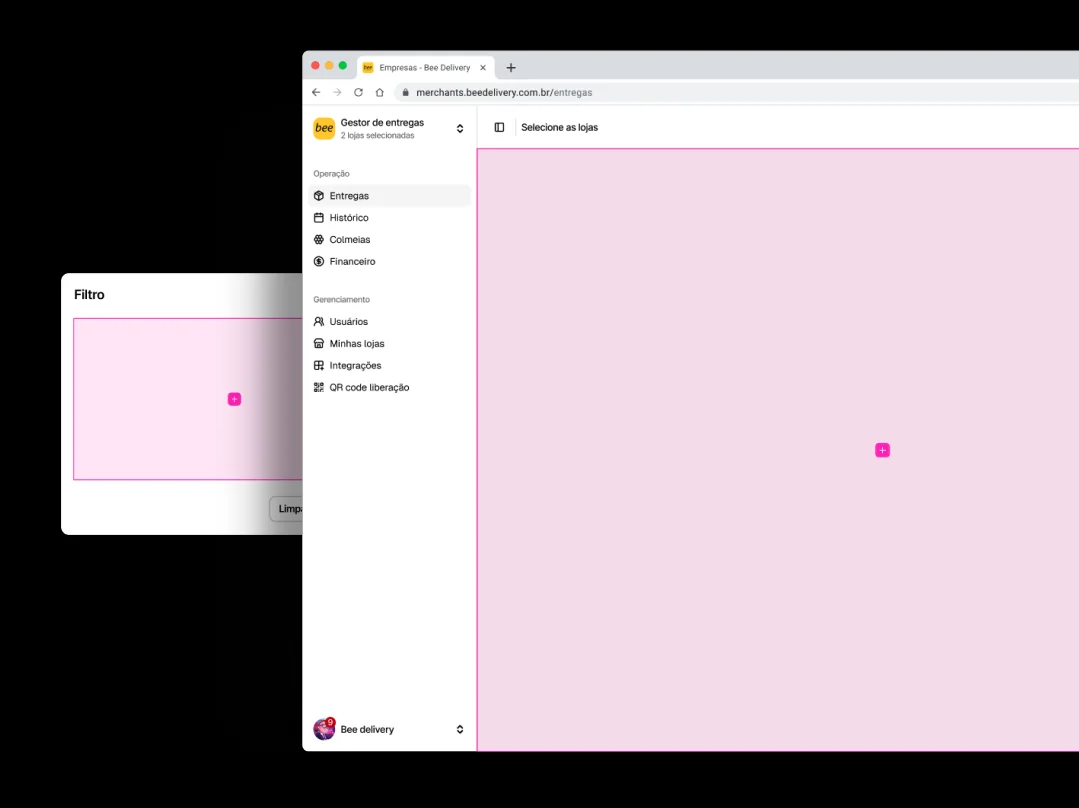
One of the goals was to cut the design team's manual work as much as possible, so we set out to create instances that would cover every product and every scenario. One of the features that most helped avoid creating lots of components was the slot component, used in those scenarios and especially to build complete product screens.
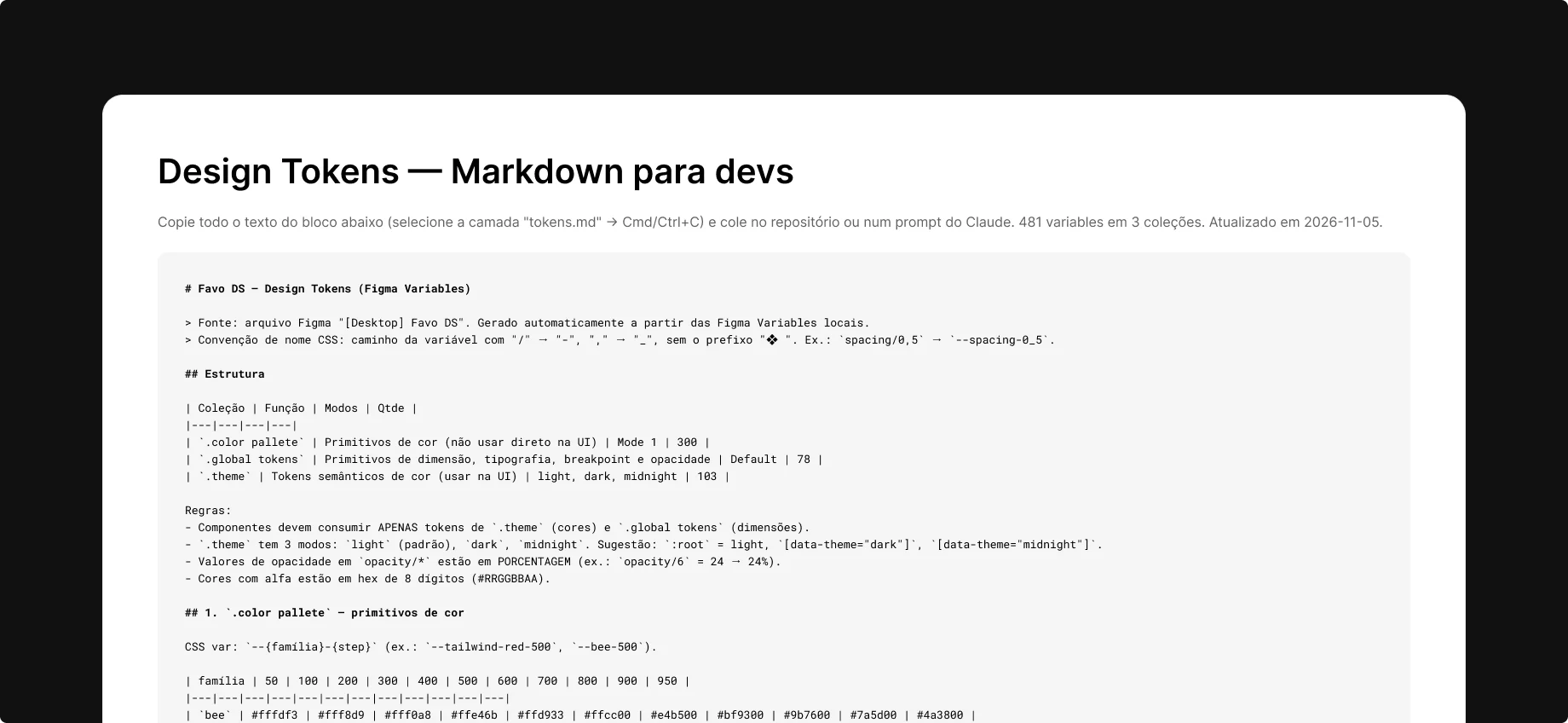
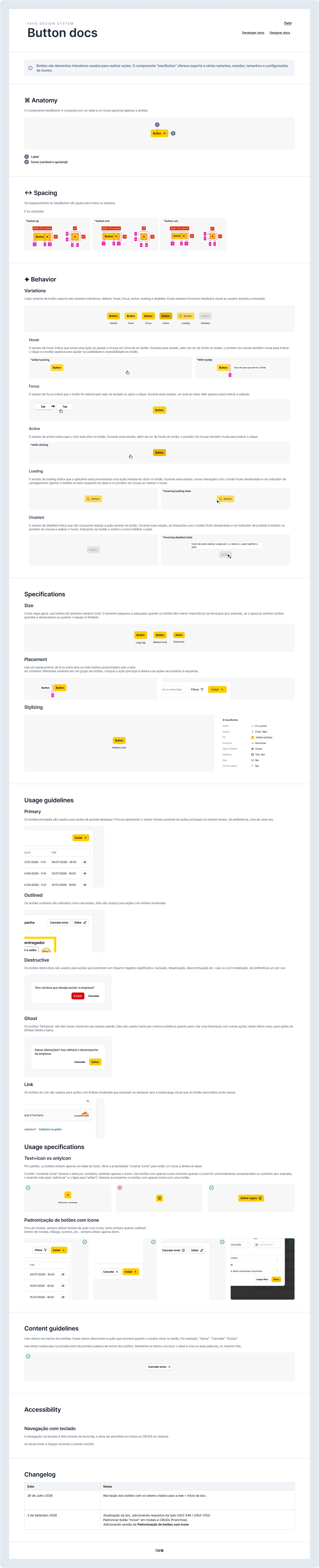
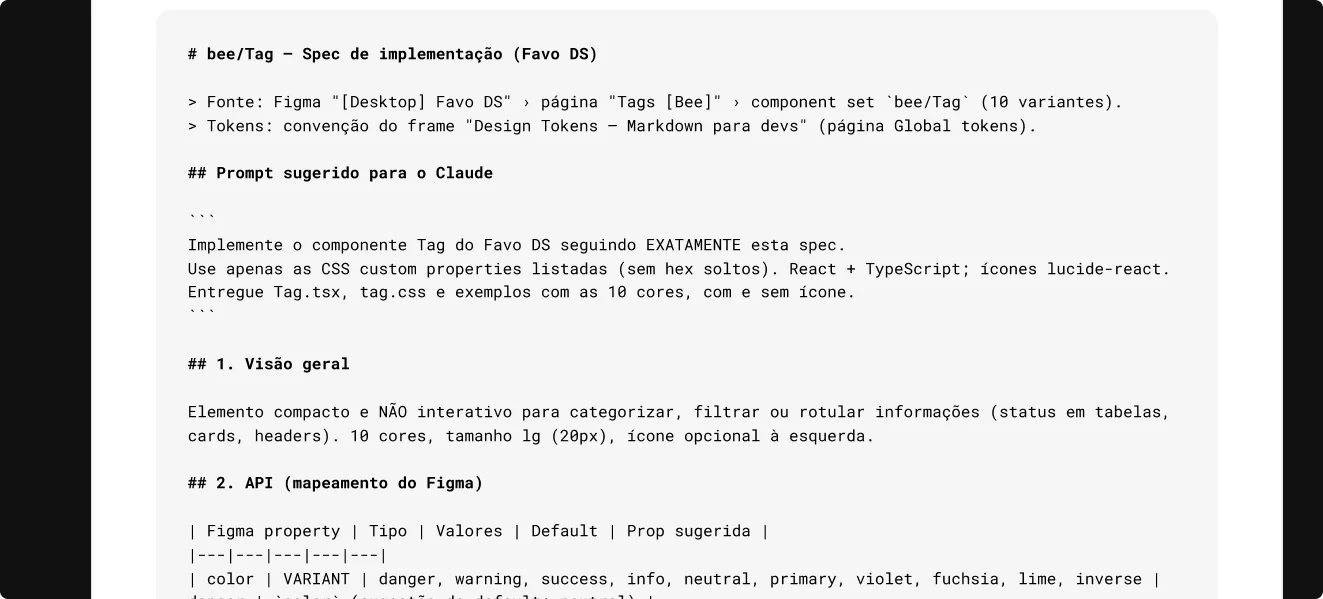
In addition to the visual design, one of the project's key differentiators was the focus on integration between Design, development, and Artificial Intelligence. For each component, I developed structured Markdown (MD) documentation to facilitate interpretation by AI tools, allowing front-end developers to access clearer information about properties, behaviors, variants, and implementation guidelines. This approach aims to optimize the AI-assisted development workflow by reducing ambiguities and bringing the Design System even closer to the code.
Impact & results
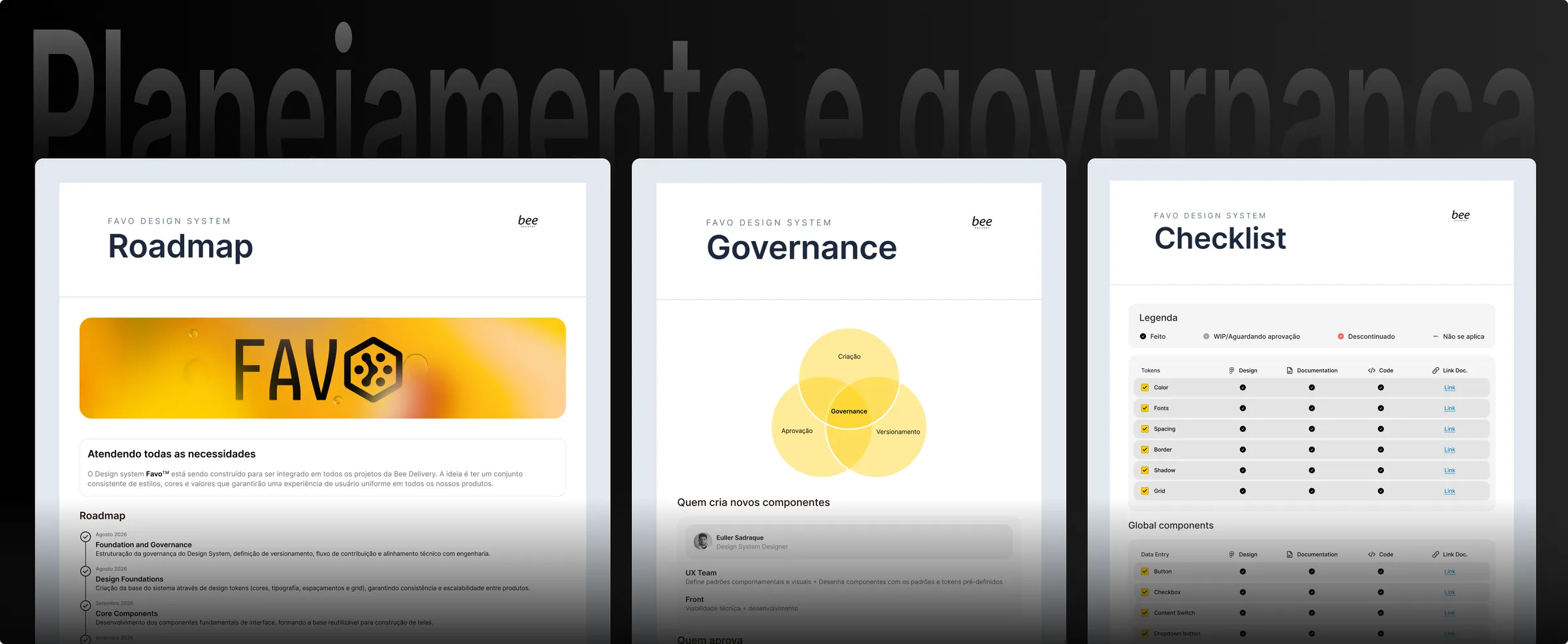
Currently, the entire design framework is complete, including the mapping of the components to be replaced and implemented. The project remains in development, with a roadmap dedicated to the implementation, governance, evolution, and maintenance of the library.
The Design System has already received 100% approval from the development team and the company, validating the proposed solution and its alignment with technical and business needs.
More than just a component library, the project represents the creation of a shared foundation between Design and Engineering, designed to promote visual consistency, operational efficiency, and smarter integration between design, code, and AI.
- 5months to build
- 45components designed & documented
- 4products served
- 100%brand consistency